
ChatGPT SEO in 2026: 9 Proven Tactics to Rank in ChatGPT and Get Recommended
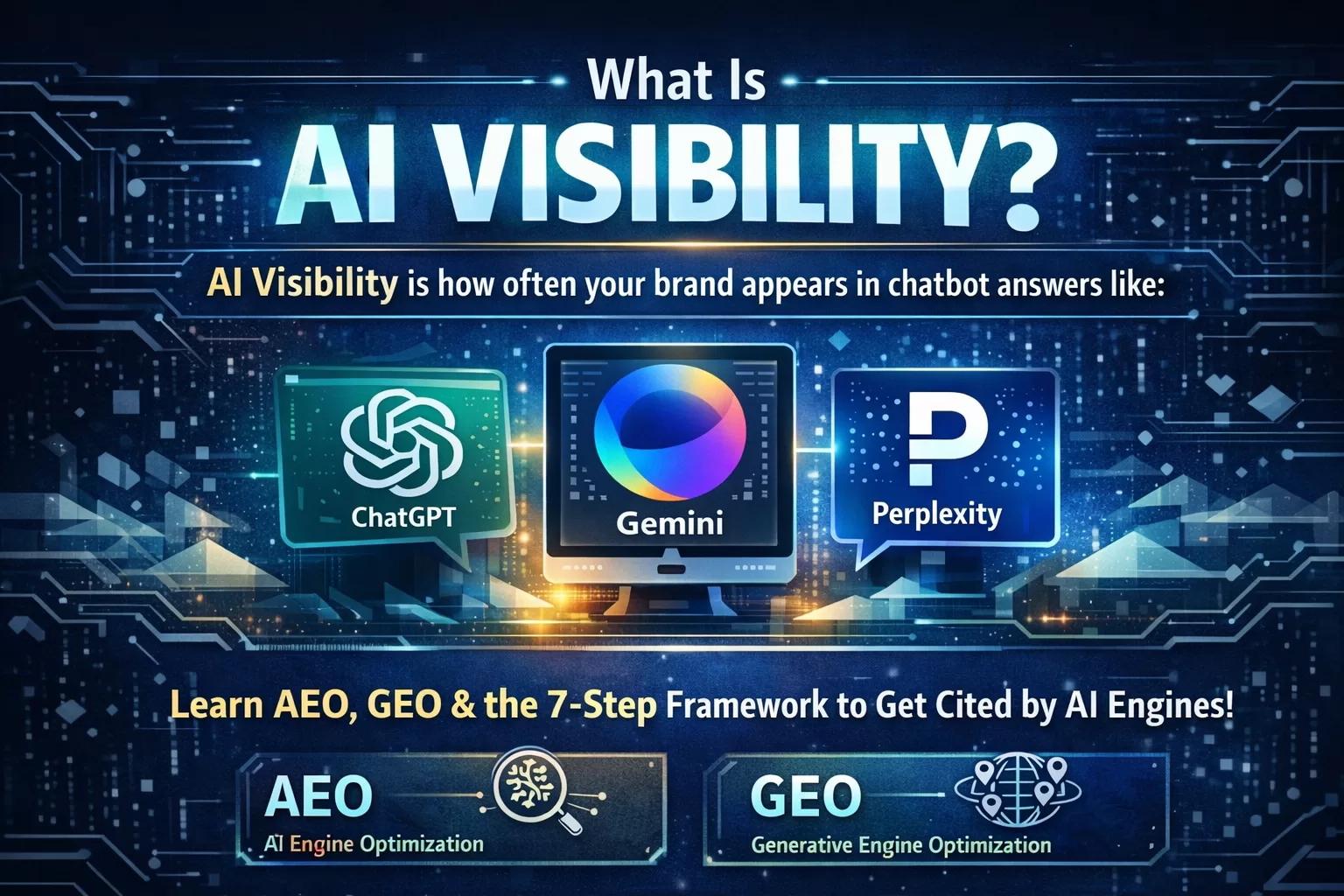
Agentic AI search is the shift from typing keywords into a search box to delegating entire tasks to autonomous AI agents that browse, compare, decide, and even purchase on your behalf. Instead of returning ten blue links, tools like ChatGPT agents, Google Gemini, Perplexity, and Microsoft Copilot now read the web, synthesize an answer, and act. For brands, this means the new battleground is no longer ranking #1 on Google — it is being the source an AI agent trusts, cites, and recommends. Winning here depends on Answer Engine Optimization (AEO) and Generative Engine Optimization (GEO), and in 2026 mastering both is no longer optional.
The move from search boxes to autonomous AI agents is not a future prediction — it is the current reality. Industry analysts project that a growing share of traditional search traffic will migrate to AI chatbots and answer engines through 2026, and a majority of Google searches already end without a click because users get their answer directly from AI Overviews. When an AI agent can research, shortlist, and even complete a purchase on a user’s behalf, the brand it references is the brand that wins the customer.
For startups and SMBs, this shift is both a threat and an opportunity. The threat is simple: if your brand is not part of the AI answer, you are invisible to a fast-growing segment of buyers. The opportunity is just as real — the AI visibility landscape is still early enough that focused, smaller brands can build citation authority before larger competitors even react.
The brands that optimize for AI engines and agentic workflows now are capturing far more visibility than those waiting — and the gap widens every month.
Before you invest in any of them, it helps to understand how these three disciplines relate — and why agentic AI makes all three more important, not less.
Search Engine Optimization (SEO) focuses on ranking your website in organic results on Google and Bing to drive clicks. SEO has been the backbone of digital visibility for two decades and still matters — but on its own it no longer captures the users who never leave the AI answer.
Answer Engine Optimization (AEO) focuses on getting your brand cited inside AI-generated answers across ChatGPT, Perplexity, Google AI Overviews, Copilot, and voice assistants. Where SEO chases rankings and clicks, AEO aims for the citation — being the trusted source the model quotes.
Generative Engine Optimization (GEO) is the broader discipline of shaping how generative AI systems and autonomous AI agents understand, represent, and recommend your brand. GEO covers entity clarity, structured data, and the off-site signals agents rely on when they act without a human in the loop.
The takeaway for startups: you need all three working together. SEO builds the crawlable foundation, AEO earns the citation, and GEO makes your brand the one agentic AI trusts — compounding into durable AI visibility.
AI answer engines and autonomous agents do not rank pages the way Google traditionally did. They do not rely on backlink counts or keyword density as primary signals. Instead, they evaluate content through a different lens:
Entity clarity. AI systems need to understand exactly what your brand is, what it does, who it serves, and how it relates to other entities in the knowledge graph. Organization, Product, Service, and Person schema markup provide explicit signals that reduce AI guesswork.
Answer-first structure. Models extract answers from content organized with clear headings, direct question-and-answer patterns, and self-contained sections. A paragraph that stands alone as a complete answer is far more likely to be cited than one buried in a wall of text.
Source authority. AI engines cross-reference information across many sources. If your brand is consistently mentioned across authoritative publications, directories, and communities, models treat it as a trustworthy entity worth citing.
Freshness and accuracy. Agentic AI favors content that is recently updated and factually consistent. Outdated stats and contradictory claims get filtered out before a citation is ever made.
Machine-readability. Content with proper structured data, clean HTML, and fast, crawlable pages has a significantly higher chance of appearing in AI-generated answers and agent workflows.
Here is the exact framework we use at Kesar Technolab to build AI visibility for startup and SMB clients in the agentic era:
Step 1: AI Visibility Audit. Before optimizing anything, know where you stand. Query your brand name, primary services, and target keywords across ChatGPT, Gemini, Perplexity, and Claude. Document whether your brand appears, which competitors get cited, and whether the information shown about you is accurate.
Step 2: Entity Foundation. Implement comprehensive schema markup — Organization, Service, Product, FAQ, HowTo, Person (for founders), and BreadcrumbList. Keep your brand entity consistent across your website, Google Business Profile, LinkedIn, and industry directories so agents never get conflicting signals.
Step 3: Answer-First Content Architecture. Restructure key pages so every important section opens with a direct, complete answer before expanding into detail. Use clear H2 and H3 headings that mirror the exact questions your audience asks, and add FAQ blocks to every service and pillar page.
Step 4: Topic Authority Building. Build pillar-and-cluster content around your core themes. If agentic AI is your category, you need depth across AEO, GEO, structured data, and AI visibility optimization so models see you as a genuine authority.
Step 5: Entity Authority Amplification. Get your brand mentioned accurately on the high-authority sources AI models are trained on and actively crawl — reputable publications, directories, and communities that strengthen your knowledge graph presence.
Step 6: Technical Foundation. Agentic AI still relies on solid SEO fundamentals. Ensure your site is fast, crawlable, mobile-friendly, and free of broken internal links so agents can access and parse your content.
Step 7: Monitor, Measure, Iterate. Track performance across platforms with AI visibility tools and manual prompt testing. Watch your AI citation share, refine what works, and update content as models and agents evolve.
Ignoring SEO fundamentals. Agentic AI does not replace SEO — it extends it. If your site is slow, uncrawlable, or riddled with broken links, AI agents cannot extract your content. Fix the foundation first.
Publishing volume without structure. AI engines do not reward word count — they reward clarity, structure, and citable facts. One well-structured guide with clear Q&A sections will out-cite ten shallow blog posts.
Inconsistent entity information. If your name, address, service descriptions, or team details conflict across your website, Google Business Profile, LinkedIn, and directories, agents assign lower trust. Entity consistency is non-negotiable.
Treating agents like search engines. Agents do not just read — they act. If your pricing, availability, and next steps are not machine-readable and unambiguous, an agent will skip you for a competitor it understands better.
Not tracking AI citations. You cannot improve what you do not measure. Most startups have no idea whether their brand appears in AI answers — or whether platforms are presenting inaccurate information about them. Start monitoring today.
AI visibility is not a vanity metric. When ChatGPT or an autonomous agent recommends your product to a user actively researching your category, that is a qualified lead arriving with pre-built trust. When Perplexity cites your guide as an authoritative source, that builds brand authority that compounds. When Google AI Overviews feature your answer at the top of the page, you capture attention even when users never click through.
For startups on limited budgets, agentic AI visibility offers something traditional channels rarely do: a compounding advantage. Once your brand earns entity authority in the knowledge graph and models recognize you as a reliable source, that citation advantage becomes hard for competitors to displace — and increasingly, the agent that trusts you is the one closing the sale.
The window for first-mover advantage is open today. It will not stay open indefinitely.
We built our entire agency around one thesis: the brands that win in 2026 and beyond will be the ones visible to both humans and AI agents. Our AI Visibility & Optimization service covers the full spectrum — baseline audits, schema engineering, answer-first content restructuring, entity authority building, and ongoing citation monitoring. We work exclusively with startups and SMBs because that is where the biggest agentic-search opportunity lies. Curious how the investment compares? See our AI visibility agency pricing guide.
If your brand is not showing up when prospects — or their AI agents — ask for the solutions you offer, we should talk.
+91 63531 74560
Agentic AI search is when autonomous AI agents in tools like ChatGPT, Google Gemini, Perplexity, and Microsoft Copilot research, compare, and act on a task for the user instead of returning a list of links. For brands, visibility means being the source the agent trusts, cites, and recommends, which is earned through Answer Engine Optimization (AEO) and Generative Engine Optimization (GEO).
Traditional SEO optimizes to rank a page and earn a click on Google. Agentic AI search optimizes to be cited and acted on inside an AI-generated answer, often with no click at all. SEO still builds the crawlable foundation, but AEO and GEO determine whether an AI agent selects, quotes, or recommends your brand.
Foundational work such as schema markup, entity consistency, and answer-first content can be implemented within 2 to 4 weeks. Measurable improvements in AI citations typically appear over 2 to 4 months as models re-crawl your content and your entity authority strengthens across the web.
Yes, arguably more than for large brands. The agentic search landscape is still early, so focused startups can build citation and entity authority before bigger competitors react. Being the trusted source an AI agent recommends is a durable, compounding advantage that is hard to displace later.
Prioritize ChatGPT and its agents (OpenAI), Google Gemini and AI Overviews, Perplexity AI, Microsoft Copilot, and Claude. Optimizing for clear entities, structured data, and answer-first content improves visibility across all of them, since these agents rely on similar trust and citation signals.