Knowledge Base
- Home
- Knowledge Base
Frequently Asked Questions About AI Visibility, AEO & GEO
This AI visibility FAQ collects the questions founders and marketing teams ask us most often about AEO, GEO, schema, costs and timelines, with short, direct answers. For background on how Google selects sources for AI answers, see Google’s AI features and your website documentation. If you want to go deeper, start with one of these guides:
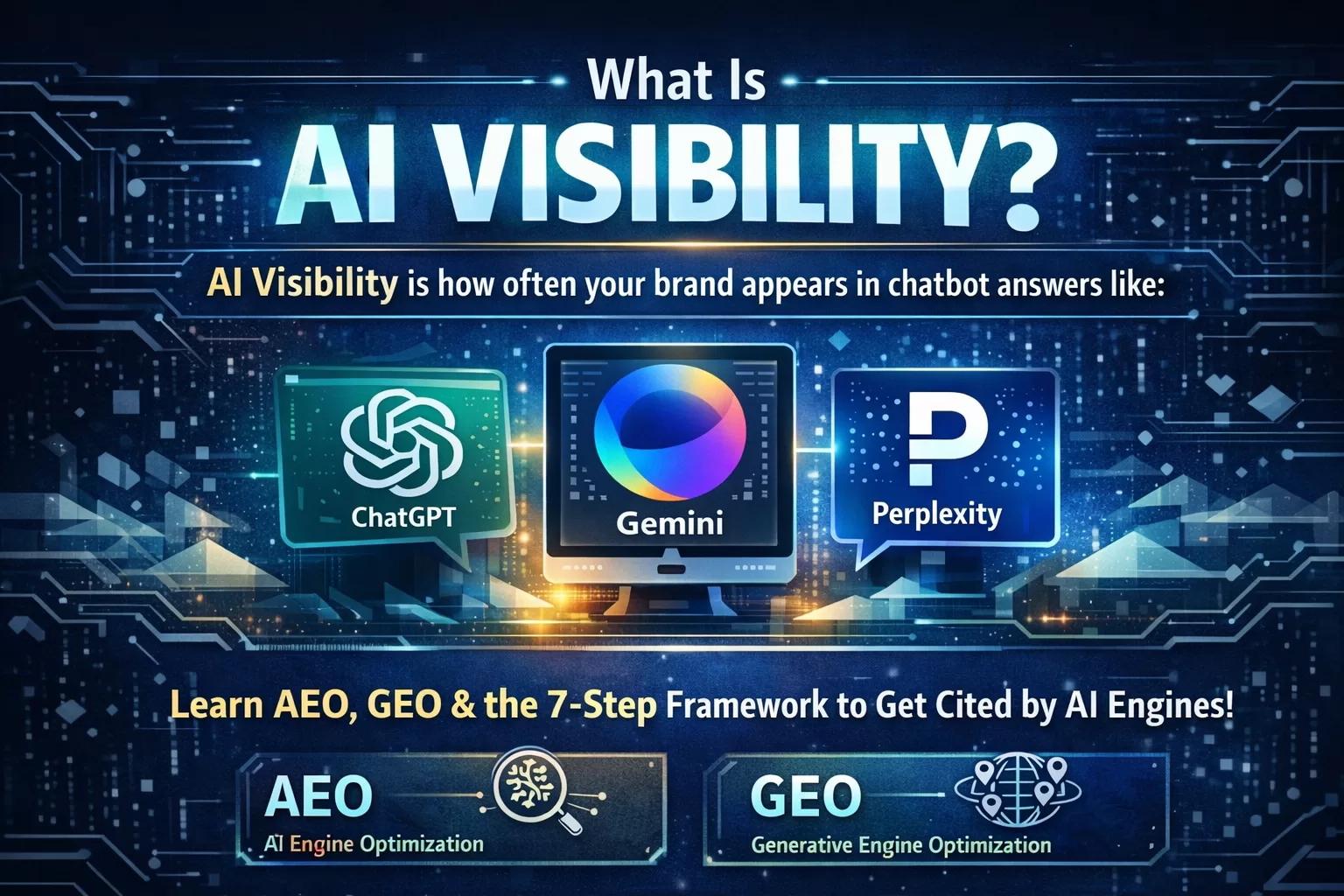

Everything you need to know about AI Visibility, Answer Engine Optimization (AEO), and Generative Engine Optimization (GEO) — how it works, what Kesar Technolab does, and how AI platforms like ChatGPT, Gemini, and Perplexity discover and cite your brand.
What is AI Visibility?
AI Visibility is how often and how accurately your brand appears, is described, and is recommended inside AI-generated answers — in tools like ChatGPT, Google Gemini, Perplexity, and Google AI Overviews. As more people ask AI assistants for recommendations instead of typing keywords into Google, AI Visibility has become as important as traditional search rankings for getting discovered.
What is AEO (Answer Engine Optimization)?
GEO (Generative Engine Optimization) is the practice of shaping how generative AI models like ChatGPT and Gemini synthesize, phrase, and cite information about your brand when generating a novel answer. It goes beyond AEO by focusing on how your content is used as source material within AI-written responses, not just whether it's directly quoted.
What is GEO (Generative Engine Optimization)?
AI Visibility is how often and how accurately your brand appears, is described, and is recommended inside AI-generated answers — in tools like ChatGPT, Google Gemini, Perplexity, and Google AI Overviews. As more people ask AI assistants for recommendations instead of typing keywords into Google, AI Visibility has become as important as traditional search rankings for getting discovered.
How is AEO different from traditional SEO?
Pricing depends on your current site size, technical foundation, and how many services you combine (audit, content, schema, ongoing optimization). We scope every engagement after an initial audit so you only pay for what your brand actually needs — reach out for a free assessment and a tailored quote.
Why does AI Visibility matter for businesses in 2026?
Reach out through our Contact page for a free AI Visibility assessment. We'll show you exactly how your brand currently appears (or doesn't appear) across AI platforms like ChatGPT and Gemini, and outline a tailored AEO and GEO roadmap to improve it.
What services does Kesar Technolab offer?
AI Visibility is how often and how accurately your brand appears, is described, and is recommended inside AI-generated answers — in tools like ChatGPT, Google Gemini, Perplexity, and Google AI Overviews. As more people ask AI assistants for recommendations instead of typing keywords into Google, AI Visibility has become as important as traditional search rankings for getting discovered.
Which AI platforms does Kesar Technolab optimize for?
AI Visibility is how often and how accurately your brand appears, is described, and is recommended inside AI-generated answers — in tools like ChatGPT, Google Gemini, Perplexity, and Google AI Overviews. As more people ask AI assistants for recommendations instead of typing keywords into Google, AI Visibility has become as important as traditional search rankings for getting discovered.
What is the process for an AI Visibility engagement?
AI Visibility is how often and how accurately your brand appears, is described, and is recommended inside AI-generated answers — in tools like ChatGPT, Google Gemini, Perplexity, and Google AI Overviews. As more people ask AI assistants for recommendations instead of typing keywords into Google, AI Visibility has become as important as traditional search rankings for getting discovered.
How long does it take to see results from AEO and GEO?
AI Visibility is how often and how accurately your brand appears, is described, and is recommended inside AI-generated answers — in tools like ChatGPT, Google Gemini, Perplexity, and Google AI Overviews. As more people ask AI assistants for recommendations instead of typing keywords into Google, AI Visibility has become as important as traditional search rankings for getting discovered.
How much does AI Visibility optimization cost?
Yes. Ranking on Google measures visibility in traditional search results, but it does not guarantee your brand gets cited inside AI-generated answers on ChatGPT, Gemini, or Perplexity. These platforms use different retrieval logic based on entity authority and structured data. Many well-ranked sites are still completely invisible in AI answers — AEO and GEO close that gap.
Who does Kesar Technolab work with?
Yes — our AEO and GEO strategies are platform-agnostic. Because we focus on the underlying signals AI models share (entity authority, structured data, topical depth, and content retrievability), the same optimization work improves your brand's chances of being cited across ChatGPT, Gemini, Perplexity, Copilot, and Claude simultaneously.
Is Kesar Technolab a global agency?
AI Visibility is how often and how accurately your brand appears, is described, and is recommended inside AI-generated answers — in tools like ChatGPT, Google Gemini, Perplexity, and Google AI Overviews. As more people ask AI assistants for recommendations instead of typing keywords into Google, AI Visibility has become as important as traditional search rankings for getting discovered.
What makes Kesar Technolab different from a typical digital marketing agency?
AI Visibility is how often and how accurately your brand appears, is described, and is recommended inside AI-generated answers — in tools like ChatGPT, Google Gemini, Perplexity, and Google AI Overviews. As more people ask AI assistants for recommendations instead of typing keywords into Google, AI Visibility has become as important as traditional search rankings for getting discovered.
Does Kesar Technolab offer web development along with AI visibility services?
AI Visibility is how often and how accurately your brand appears, is described, and is recommended inside AI-generated answers — in tools like ChatGPT, Google Gemini, Perplexity, and Google AI Overviews. As more people ask AI assistants for recommendations instead of typing keywords into Google, AI Visibility has become as important as traditional search rankings for getting discovered.
What is structured data (schema markup) and why does it matter for AEO?
AI Visibility is how often and how accurately your brand appears, is described, and is recommended inside AI-generated answers — in tools like ChatGPT, Google Gemini, Perplexity, and Google AI Overviews. As more people ask AI assistants for recommendations instead of typing keywords into Google, AI Visibility has become as important as traditional search rankings for getting discovered.
Can small businesses and startups benefit from AEO and GEO?
AI Visibility is how often and how accurately your brand appears, is described, and is recommended inside AI-generated answers — in tools like ChatGPT, Google Gemini, Perplexity, and Google AI Overviews. As more people ask AI assistants for recommendations instead of typing keywords into Google, AI Visibility has become as important as traditional search rankings for getting discovered.
Does AI Visibility replace traditional SEO?
AI Visibility is how often and how accurately your brand appears, is described, and is recommended inside AI-generated answers — in tools like ChatGPT, Google Gemini, Perplexity, and Google AI Overviews. As more people ask AI assistants for recommendations instead of typing keywords into Google, AI Visibility has become as important as traditional search rankings for getting discovered.
How do I get started with Kesar Technolab?
AI Visibility is how often and how accurately your brand appears, is described, and is recommended inside AI-generated answers — in tools like ChatGPT, Google Gemini, Perplexity, and Google AI Overviews. As more people ask AI assistants for recommendations instead of typing keywords into Google, AI Visibility has become as important as traditional search rankings for getting discovered.
How does Kesar Technolab get my brand cited in ChatGPT, Gemini, and other AI engines?
We start with an AI visibility audit that shows exactly how (or whether) your brand currently appears across ChatGPT, Gemini, Perplexity, and Claude. From there we build out structured data, strengthen your entity authority through knowledge graph signals, and restructure content to match how these models retrieve information — so your brand becomes a source AI engines can confidently cite and recommend.
What is entity authority and why does it matter for AI visibility?
Entity authority is how clearly search engines and AI models understand who you are, what you do, and how you relate to other trusted entities online. Strong entity authority — built through consistent NAP data, schema markup, and mentions on high-authority sources — is what convinces AI engines your brand is a credible answer worth citing, rather than just another website in the index.
Do I need AI Visibility Optimization if my website already ranks well on Google?
Yes. Ranking on Google measures visibility in traditional search results, but it does not guarantee your brand gets cited inside AI-generated answers on ChatGPT, Gemini, or Perplexity. These platforms use different retrieval logic based on entity authority and structured data. Many well-ranked sites are still completely invisible in AI answers — AEO and GEO close that gap.
What schema markup do you implement for AI Engine Optimization (AEO)?
We implement Organization, Service, Product, FAQ, and HowTo schema, along with knowledge graph signals that clarify your brand's identity and offerings. This structured data gives AI engines and search crawlers a machine-readable map of your business, making it far easier for them to extract, trust, and surface your information in generated answers.
How do you measure AI visibility and citation performance?
We track how often and how accurately your brand is cited across ChatGPT, Gemini, Perplexity, and Copilot for relevant queries in your category, alongside your entity authority signals and structured data health. Every engagement includes a baseline audit and ongoing monthly monitoring so you can see your AI citation performance improve over time.
Can AI Visibility Optimization help my brand appear in Perplexity and Copilot results?
Yes — our AEO and GEO strategies are platform-agnostic. Because we focus on the underlying signals AI models share (entity authority, structured data, topical depth, and content retrievability), the same optimization work improves your brand's chances of being cited across ChatGPT, Gemini, Perplexity, Copilot, and Claude simultaneously.
What is included in a brand positioning strategy?
Our brand positioning strategy defines your competitive differentiation, target audience psychographics, and value proposition in language that resonates with both human buyers and AI engines. It becomes the foundation for your messaging, visual identity, and entity optimization — ensuring every touchpoint communicates the same clear story about who you are and why customers should choose you.
How does brand consulting help my brand get discovered by AI platforms?
We map your brand's entity landscape to see how AI platforms and search engines currently perceive you, then architect your positioning, messaging, and visual identity to be semantically coherent — not just visually consistent. This closes the gap between how you want to be known and how algorithms actually describe and recommend you.
Do you help startups build a brand from scratch?
Yes. We regularly work with early-stage startups that have no existing brand identity. Our discovery workshop uncovers your positioning and audience from the ground up, and we deliver a complete brand playbook — positioning, messaging, visual identity, and entity optimization — that your team can execute independently as you grow.
What is a brand entity optimization plan?
A brand entity optimization plan translates your brand identity into the structured data, schema markup, and knowledge graph signals that search engines and AI platforms use to understand your business. It ensures your brand strategy is not just a design document, but something algorithms can actually read, verify, and cite correctly.
How long does a full brand consulting and identity engagement take?
Most brand consulting engagements run 4 to 8 weeks, covering discovery and competitive analysis, positioning and messaging architecture, visual identity design, and entity optimization rollout planning. Timelines vary based on the number of stakeholders involved and whether you need investor-facing brand narratives for fundraising.
Do you create pitch deck and investor branding for startups raising funding?
Yes. For startups preparing to raise capital, we build investor-facing brand narratives and pitch deck storytelling frameworks alongside your core brand identity — ensuring your positioning is compelling to investors, customers, and the AI and search platforms that will shape how your brand is discovered.
What product categories do you design packaging for?
We design packaging across skincare, Ayurveda, wellness, personal care, food and beverage, supplements, and consumer electronics, with the deepest expertise in D2C beauty and wellness brands. We also handle regulatory labeling and ingredient panels alongside premium shelf appeal, and offer sustainable and eco-friendly packaging material options.
Can you design packaging that works for both retail shelves and Amazon or Shopify listings?
Yes — we design for both simultaneously. Retail shelf packaging and e-commerce thumbnail packaging have different visual requirements, so every project includes structural design, print-ready artwork for physical production, and 3D mockups optimized specifically for product listing images on Amazon, Shopify, and other e-commerce platforms.
Do you handle regulatory labeling requirements for skincare and Ayurveda packaging?
Yes. For Ayurveda, wellness, skincare, and food brands, we manage statutory label requirements, ingredient panels, and batch coding areas as part of the packaging design process, so your packaging is compliant and market-ready without requiring a separate regulatory consultant.
What packaging formats do you design — boxes, bottles, pouches?
We design across all major structural formats including boxes, pouches, bottles, jars, tubes, and sachets. Every project starts with a competitive shelf audit and structural exploration phase to determine which format best fits your product category, distribution channel, and target buyer psychology.
Do you provide 3D mockups for e-commerce product photography?
Yes. Beyond the physical package, we create 3D product mockups for e-commerce listings, lifestyle photography art direction guides, and unboxing experience design — including inserts and QR code placement — plus product schema markup so your packaging appears correctly in Google Shopping and AI-generated product recommendations.
How many packaging design concepts will I receive?
We typically present multiple structural and visual concepts following our product and category audit, giving you a genuine range of creative directions to choose from before we move into final visual design, material selection, and print specification for your chosen concept.
Which advertising platforms does Kesar Technolab manage for performance marketing?
We primarily manage campaigns on Meta Ads (Facebook and Instagram), Google Ads (Search, Display, Shopping, and YouTube), and programmatic display networks. For B2B clients, we also run LinkedIn Ads. Our deepest expertise is in the Meta and Google ecosystems, which cover the majority of paid media opportunities for startups and SMBs.
Why is tracking infrastructure important before running Meta or Google ad campaigns?
Performance marketing without proper tracking is expensive guesswork. We audit your entire tracking stack — pixel health, CAPI configuration, Events Manager diagnostics, and GA4 event mapping — before launching a single ad. If your tracking is broken, your optimization decisions are built on bad data, so we fix the plumbing first.
What is CAPI and why does it matter for my ad performance?
CAPI (Conversions API) sends conversion data directly from your server to Meta, bypassing browser-based tracking limitations caused by ad blockers and iOS privacy restrictions. Proper CAPI implementation improves data accuracy, which directly improves ad delivery optimization, targeting, and ultimately your return on ad spend (ROAS).
What is the minimum ad budget you recommend for performance marketing?
The right budget depends on your industry, average order value, and sales cycle, but we generally recommend enough spend to generate statistically meaningful conversion data within 2-4 weeks for algorithm optimization to work effectively. We assess your specific numbers during onboarding and recommend a realistic starting budget.
How do you report on ad campaign performance?
You receive weekly performance reports with clear ROAS, CPA, and LTV metrics rather than vanity numbers like impressions or clicks. For e-commerce clients we report on actual revenue attribution; for lead-gen clients we track cost-per-qualified-lead and downstream pipeline value.
How quickly can I expect to see results from performance marketing campaigns?
Initial data and learnings typically emerge within the first 2-3 weeks as campaigns exit the learning phase. Meaningful, optimized performance and scaling decisions usually follow by week 4-6, once we have enough conversion data to make confident, structured optimizations rather than premature changes.
What business workflows can be automated with AI?
The highest-leverage workflows are repetitive, high-volume tasks like content production, customer support, data entry, lead qualification, reporting, and internal communications. We run a workflow audit to map your operations and score each process for automation potential based on frequency, complexity, and business impact.
Is AI automation worth it for a small team or startup?
Small teams benefit the most, because every hour saved has an outsized impact. A 5-person team that automates 10 hours of weekly manual work effectively gains an extra team member without the salary cost. We focus on lightweight implementations most SMB clients can manage independently after handoff.
What AI tools and platforms do you use for automation projects?
We build AI-powered chatbots using LLM frameworks, set up content pipelines with human-in-the-loop quality gates, and connect tools through no-code platforms like Zapier, Make, and n8n. For advanced needs, we build custom AI agents using the Anthropic and OpenAI APIs directly.
Will AI automation replace my team members?
No — our automations are designed to eliminate repetitive manual work so your team can focus on higher-value strategic tasks, not to replace people. Every implementation includes team training and documentation so your existing staff owns and operates the automated systems going forward.
Do you build custom AI chatbots for customer support?
Yes. We design and deploy LLM-powered customer support chatbots integrated into your existing tech stack, along with content generation pipelines, automated reporting dashboards, and document classification and extraction workflows for document-heavy processes.
How much does an AI automation project typically cost?
Cost depends on the number and complexity of workflows being automated, ranging from lightweight single-workflow implementations using no-code tools to custom AI agents built on direct API integrations. We start every engagement with a workflow audit that produces a prioritized roadmap so you can see cost-to-impact before committing.
How long does SEO take to show measurable results?
Realistically, 3-6 months for meaningful organic traffic growth, depending on your domain's existing authority and competitive landscape. Technical fixes often show impact within 4-6 weeks as Google recrawls your site, while content and link building are longer-term compounding investments where months 4-6 typically show the steepest growth.
What does a technical SEO audit include?
A full technical SEO audit covers crawlability and indexation, site speed and Core Web Vitals, mobile usability, XML sitemaps and robots.txt, on-page elements (titles, meta descriptions, headers), internal linking structure, structured data/schema markup, and identification of duplicate content or broken links that are holding your rankings back.
How is SEO different from your AI Visibility Optimization (AEO/GEO) service?
SEO gets you found on Google, Bing, and traditional search results pages. AI Visibility Optimization (AEO/GEO) gets your brand cited and recommended inside AI answers on ChatGPT, Perplexity, Google AI Overviews, and Gemini. They share a foundation (technical health, authority, structured content) but require different tactics on top, and most businesses need both working together.
Do you guarantee first-page Google rankings?
No ethical SEO provider can guarantee specific rankings since Google's algorithm is proprietary and constantly changing. What we do guarantee is a transparent, data-backed process: technical fixes, quality content, and authority building that consistently moves the needle, with monthly reporting so you can see exactly what's improving and why.
What is topic authority architecture in content SEO?
Topic authority architecture means structuring your content around pillar pages and supporting cluster content that comprehensively cover a subject, all internally linked to signal deep expertise to Google. Instead of one-off blog posts competing for random keywords, you build a content ecosystem that establishes genuine topical authority, which both search engines and AI models reward with higher rankings and citations.
Can you work alongside our existing in-house team or marketing agency?
Absolutely. We frequently work as a specialized SEO layer alongside in-house marketing teams and other agencies, handling technical SEO and content strategy while your team focuses on brand and campaigns, or vice versa. We're transparent about scope from day one so there's no overlap or confusion about who owns what.
How long does it take to build a custom website or web application?
Timelines vary by scope — a marketing website typically takes 4-8 weeks, while a custom web application with complex features runs 3-6 months. We provide a detailed project timeline with milestones during the discovery phase so you know exactly what to expect.
What tech stack do you use for web and app development?
We choose the stack based on your specific needs rather than a one-size-fits-all approach — commonly React, Next.js, and Node.js for web apps, WordPress/Elementor for content-driven sites, and modern frameworks like Flutter or React Native for mobile apps. We prioritize performance, scalability, and long-term maintainability.
Do you build e-commerce websites, or is that a separate service?
E-Commerce Growth is one of our dedicated service lines covering platform builds on Shopify and WooCommerce plus ongoing conversion rate optimization. Web & App Development covers custom sites and applications outside the storefront context — the two work together seamlessly when a project needs both.
Can you redesign our existing website without losing our SEO rankings?
Yes — redesigns start with a full audit of your existing URL structure, rankings, and backlinks. We implement proper 301 redirects, preserve indexed content, and monitor rankings closely post-launch so your SEO equity carries over instead of resetting to zero.
Do you offer ongoing website maintenance and support after launch?
Yes, we offer ongoing maintenance packages covering security updates, performance monitoring, backups, and content updates, so your site stays fast, secure, and current after launch without you needing an in-house developer on staff.
Can you integrate AI features like chatbots into our website or app?
Absolutely — AI chatbots, personalized recommendations, and workflow automation are increasingly standard requests. We integrate these directly during development or add them to existing sites, often connecting to the same AI & Automation Consulting workflows we build for other clients.
How long does it take to launch or grow an e-commerce store?
A new Shopify or WooCommerce store typically launches in 4-6 weeks; migrating an existing store with a full product catalog and custom features takes 8-12 weeks. Growth work like conversion optimization, SEO, and retention marketing is ongoing beyond launch, not a one-time project.
Which e-commerce platforms do you work with (Shopify, WooCommerce, etc.)?
We work primarily with Shopify and WooCommerce, the two platforms covering the vast majority of successful mid-market e-commerce stores, and can also integrate with BigCommerce or headless/custom setups when a project calls for more flexibility.
Can you help improve our conversion rate, not just build the store?
Yes — that's actually where most of our e-commerce engagements focus. We run structured CRO programs covering checkout friction, page speed, product page layout, and A/B testing, because a beautifully built store that doesn't convert isn't real growth.
Do you handle product page SEO and shopping feed optimization?
Yes, we optimize product titles, descriptions, structured data (Product schema), and image alt text for search, and we configure and manage your Google Shopping and Meta product feeds so your catalog is discoverable everywhere shoppers are looking.
Can you integrate our store with our existing inventory or ERP system?
Yes, we've integrated stores with inventory management systems, ERPs, and fulfillment platforms via native connectors or custom API work, so your stock levels, orders, and pricing stay in sync automatically across every channel.
What KPIs do you track to measure e-commerce growth success?
We track conversion rate, average order value, customer acquisition cost, return on ad spend, cart abandonment rate, and repeat purchase rate — the metrics that actually tie to revenue, not just traffic.