
SEO · AEO · GEO · Marketing
Project overview
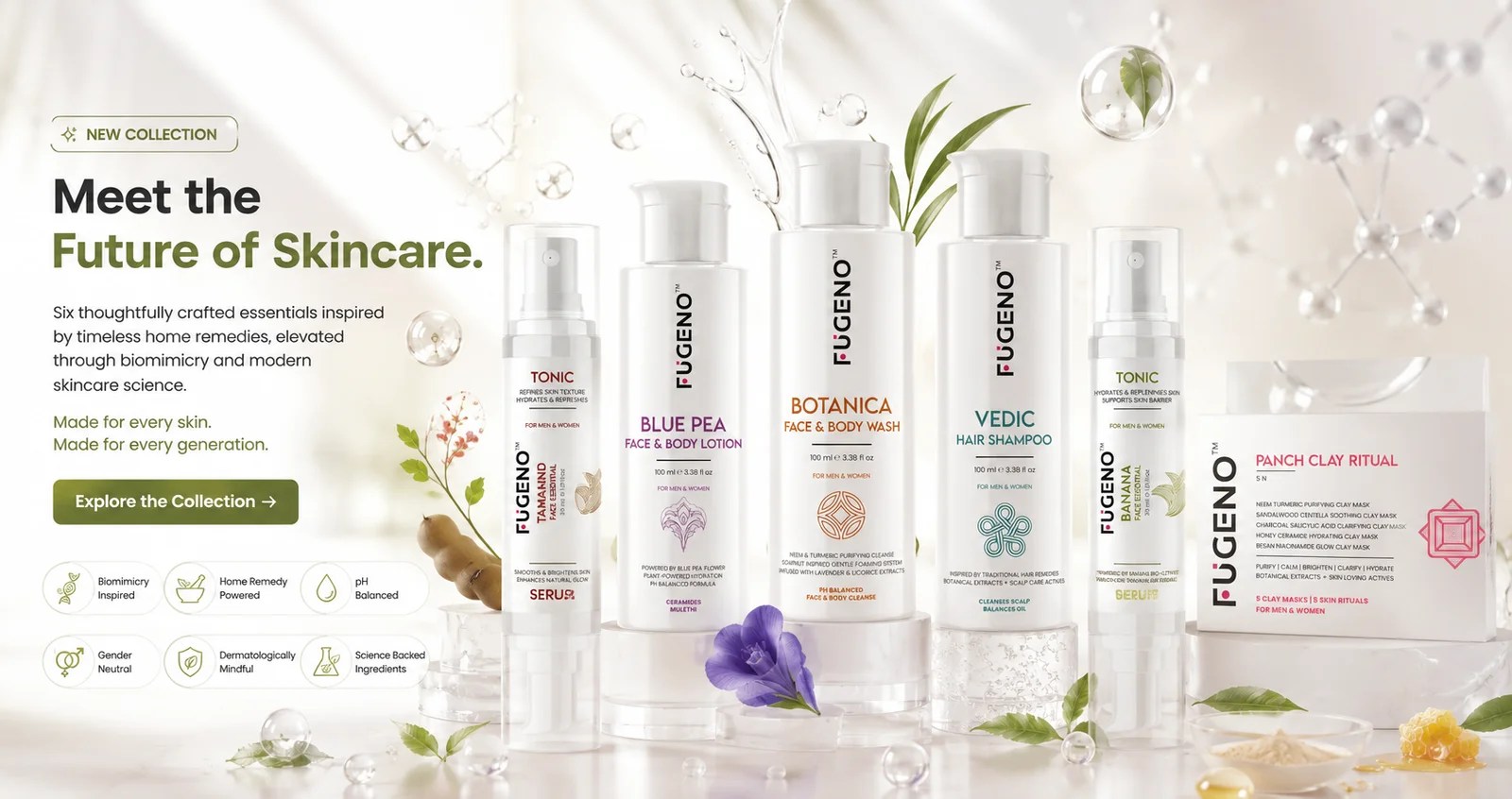
Fugeno is a direct-to-consumer Ayurvedic skincare brand from Ahmedabad that positions itself as India’s first gender-neutral beauty brand. Its 27 face, body, eye, lip and hair products blend traditional Ayurvedic remedies with biomimicry-led formulation. We worked on SEO, AEO, GEO and marketing so that search engines and AI assistants can find the brand, read it, and describe it correctly.
Client
Fugeno Care OPC Pvt. Ltd.
Industry
D2C Ayurvedic skincare
Market
India
Services
SEO, AEO, GEO, Marketing
Website
12
AI crawlers allowed in robots.txt
27
Products mapped in llms.txt
55
Blog guides in the sitemap
Figures counted from the live site, October 2026.
The challenge
Why this project mattered
Shoppers now ask ChatGPT, Claude, Perplexity and Gemini questions like “which Ayurvedic serum suits oily skin?” and get one synthesised answer instead of ten blue links. A young D2C brand competes in those answers against marketplaces and legacy labels with far more coverage.
If AI crawlers are blocked, or have to guess at prices, ingredients and shipping policies, the brand is either left out of the answer or described wrongly.
What we did
Our approach
01
Open access for AI crawlers
robots.txt explicitly allows 12 AI user agents, including GPTBot, OAI-SearchBot, ChatGPT-User, ClaudeBot, Google-Extended, PerplexityBot and Applebot. WooCommerce logs, transient files and wp-admin stay blocked, and every crawler is pointed to the sitemap index.
02
An llms.txt brand file
A plain-language brief at fugeno.com/llms.txt covering who the brand is, its founder and legal entity, support hours, shipping and dispatch times, all 27 products across six categories with descriptions and prices, five ingredient explainers and every policy page. Language models get one authoritative source instead of stitching facts together.
03
Store and FAQ schema
Structured data that identifies Fugeno as a LocalBusiness and OnlineStore, with an OfferCatalog, the founder as a Person, a ContactPoint, opening hours, a site search action and FAQ question-and-answer markup, so machines read the same facts the customer sees.
04
Content for answer engines
A library of 55 blog guides in the sitemap, from skincare routines for Indian skin to Ayurvedic hair care, plus ingredient pages for turmeric, cinnamon, lavender, papaya and potato that answer the questions shoppers actually ask.
What We Delivered for Fugeno
The AI visibility and SEO groundwork for Fugeno is live on fugeno.com:
- robots.txt that explicitly allows 12 AI user agents, including GPTBot, OAI-SearchBot, ClaudeBot, Google-Extended and PerplexityBot, while keeping private areas blocked
- An llms.txt brand file covering the company, founder, support hours, shipping, all 27 products across six categories, five ingredient explainers and every policy page
- LocalBusiness, OnlineStore, OfferCatalog, Person, ContactPoint and FAQ structured data
- A library of 55 blog guides plus ingredient pages for turmeric, cinnamon, lavender, papaya and potato
AI citation and traffic figures will be added here once they are verified against Fugeno’s own analytics and prompt tracking.
Lessons From the Fugeno Project
1. Check access before content
Many stores unknowingly block AI crawlers through security plugins, CDN rules or old robots.txt settings. Before writing anything new, confirm that the crawlers you care about can actually reach your product and policy pages. OpenAI documents its crawlers and how to allow them in its bots overview.
2. Give AI one authoritative source
When product facts are scattered across pages, apps and marketplaces, AI assistants have to guess, and they sometimes guess wrong. A clear llms.txt file and consistent product pages give language models one reliable place to read prices, ingredients, shipping times and policies.
3. Structured data should match what shoppers see
Schema is only useful if it agrees with the visible page. Marking up the store, catalogue, founder and FAQs with the same facts customers read keeps search engines and AI assistants from receiving conflicting information.
4. Answer the questions shoppers actually ask
Shoppers ask about routines for their skin type, how an ingredient works and whether a product suits sensitive skin. Guides and ingredient pages that answer those questions directly are the pages most likely to be quoted in AI answers.
5. Keep policies easy to find
Shipping times, returns and contact details are among the first things an AI assistant is asked about a store. Clear, linked policy pages, mirrored in the llms.txt file, mean the answer a shopper receives is accurate and reassuring rather than vague.
6. Track prompts, not just rankings
Search Console shows clicks from Google, but not whether ChatGPT recommends a brand. A fixed list of buyer prompts, checked regularly across AI assistants, shows whether the work is changing how the brand is described.
Who this approach suits
This approach suits D2C brands in beauty, wellness, food and other categories where buyers ask AI assistants for recommendations, compare ingredients and want reassurance about shipping and returns before they buy.
Services Used in the Fugeno Project
- AI visibility optimization: crawler access, llms.txt and entity clarity for answer engines.
- Search engine optimization: structured data, the blog library and ingredient pages.
- E-commerce growth: product and policy information that helps shoppers decide and buy.
For Fugeno the technical work came first, because content that crawlers cannot reach or understand does not help. Once access, the llms.txt file and schema were in place, every new guide and product page could be read and described correctly from the day it was published. Want your products recommended by AI assistants? Book a free AI visibility audit.
Related Case Studies and Guides

Guide: Getting Products Recommended by AI
How ChatGPT, Perplexity and Gemini choose which products to recommend.Supy: International SEO in 6 Languages
3,500+ indexable URLs and six hreflang-linked languages for a restaurant SaaS.See all projects in our portfolio, or read our guide to llms.txt and schema markup.
Want AI assistants to recommend your brand?
We’ll audit how ChatGPT, Perplexity and Gemini describe you today and show you what to fix first.
Next case study