SEO · International & Programmatic SEO
Project overview
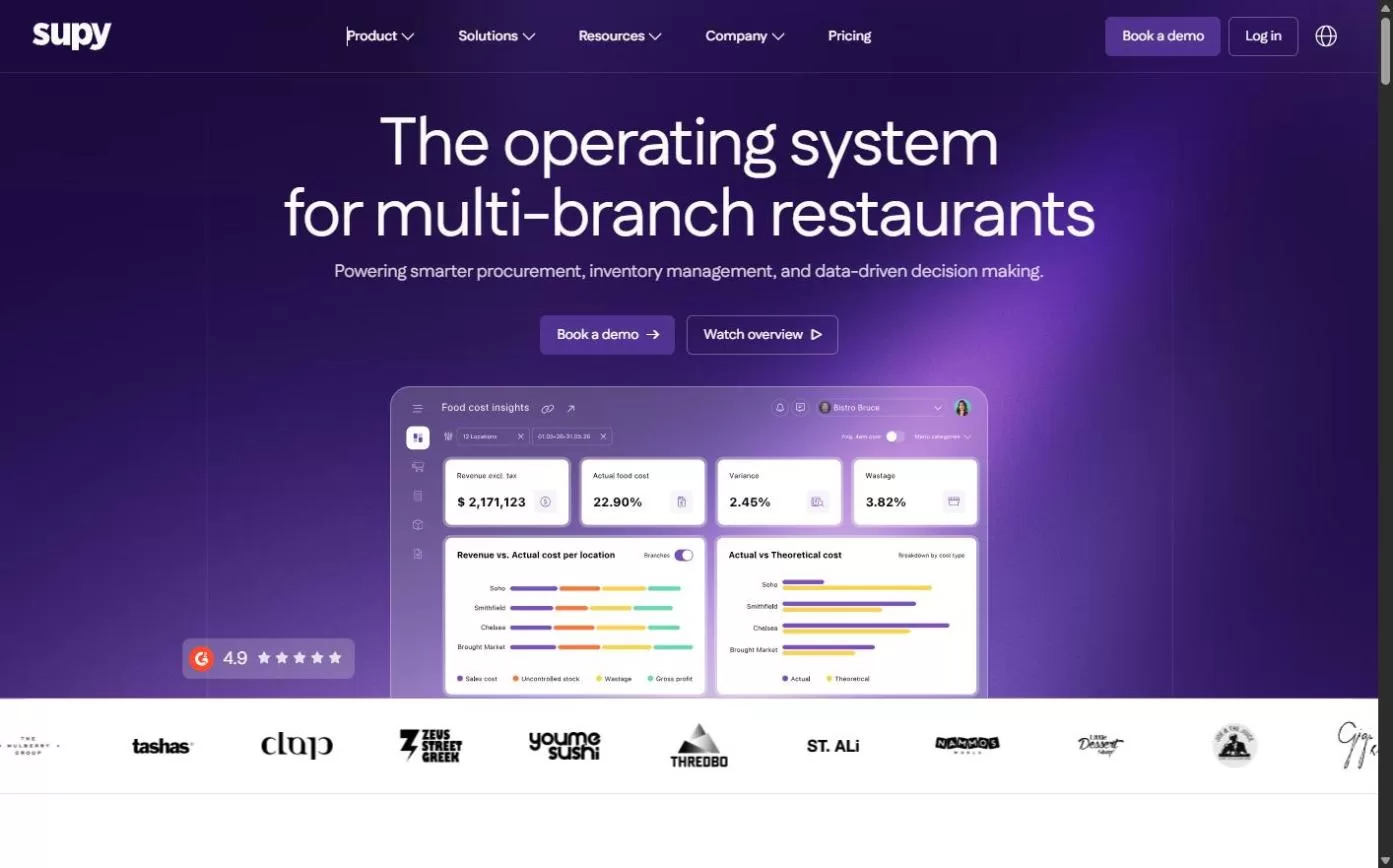
Supy is a back-of-house platform for multi-branch restaurant groups, cloud kitchens and QSR operators, covering inventory, procurement and business intelligence. Selling in several countries meant its site had to rank in more than one language and reach buyers at every stage: researching a problem, comparing tools, and checking that Supy works with the systems they already use.
Client
Supy
Industry
Restaurant tech, B2B SaaS
Markets
6 language versions
Services
International & programmatic SEO
Website
3,500+
Indexable URLs in the sitemap
6
Languages linked with hreflang
79
Integration pages
Figures counted from the live site, October 2026.
The challenge
Why this project mattered
A SaaS that sells across several countries can’t rely on a single English site. Translated pages that aren’t connected properly compete with each other, or show up in the wrong country.
Hand-built landing pages also can’t cover the long tail of “Supy + [system]” and “Supy vs [competitor]” searches that buyers run when they are close to a decision.
What we did
Our approach
01
International architecture
Six language versions: English, Arabic, French, German, Simplified Chinese and Australian English, each in its own subfolder (/ar/, /fr/, /de/, /zh-cn/, /en-au/) and linked with hreflang annotations and an x-default in the XML sitemap.
02
Programmatic integration pages
79 integration pages in each language, one for every connected system, so a search for a specific tool lands on a page that explains how it works with Supy.
03
Comparison and evaluation pages
13 platform-comparison pages and 12 “Try Supy vs” pages for buyers weighing alternatives, alongside 21 product-feature pages and 9 solution pages.
04
Blog and resources at scale
556 English blog URLs with localised blog libraries in every language, 21 customer stories and 23 podcast episodes. The sitemap now lists 3,635 indexable URLs.
What We Delivered for Supy
The live Supy site now runs on the international and programmatic structure described above:
- 3,635 indexable URLs in the XML sitemap
- Six language versions linked with hreflang and an x-default
- 79 integration pages in each language
- 13 platform-comparison pages, 12 “Try Supy vs” pages, 21 feature pages and 9 solution pages
- 556 English blog URLs with localised libraries, 21 customer stories and 23 podcast episodes
Traffic and lead figures will be added here once they are verified against Supy’s own Search Console and CRM reporting.
Lessons From the Supy Project
1. Structure first, translation second
Most international SEO problems on SaaS sites come from structure, not language. Giving every market its own subfolder, with hreflang and an x-default declared in the sitemap, told search engines exactly which page to show in which country before a single article was translated. Google documents this approach in its guide to localized versions of pages.
2. Programmatic pages need a real reason to exist
The 79 integration pages work because each one answers a genuine buyer question: does Supy connect to the tool I already use? Programmatic pages built only to target keywords tend to be thin. Pages built around a real product fact, repeated across many systems, are useful at scale.
3. Comparison pages meet buyers at the decision stage
Buyers who compare a product against a named competitor are close to choosing. The comparison and “Try Supy vs” pages give them a clear, fair answer on the brand’s own site rather than leaving that conversation to review sites.
4. AI engines read the same structure
ChatGPT, Gemini and Perplexity also rely on clean language versions, clear entities and specific product facts. The same work that supports rankings in six languages also makes it easier for AI assistants to describe the product accurately in each market, which is why we pair international SEO with AI visibility optimization.
5. Measure each market separately
A single global traffic number hides what is really happening. Each language version should be tracked on its own in Search Console, with clicks, impressions and demo requests broken down by country. That makes it obvious which markets need more content, which need better internal links and which are ready for paid campaigns.
Who this approach suits
This international and programmatic model fits B2B software companies that sell in several countries, have a product that connects to many other tools, and compete against well-known alternatives. It is less suitable for a business with one market and a short list of services, where a smaller, carefully written site usually performs better. If you are unsure which model fits, an audit of your current site and markets is the right first step.
Services Used in the Supy Project
- Search engine optimization: international architecture, hreflang, programmatic integration pages and comparison content.
- Web and app development: page templates that scale across languages without duplicate content.
- AI visibility optimization: entity and product clarity so AI assistants describe Supy consistently.
The three services worked as one program: architecture decisions were made with content in mind, templates were built so new languages and integrations could be added without new design work, and entity details stayed consistent across every version of the site. That shared foundation is what lets an international site keep growing without the duplicate-content and wrong-country problems that usually appear after the third or fourth language.
Running a SaaS in more than one market? Talk to us about international SEO for your next launch.
Related Case Studies

StockTake Online: SaaS SEO
10 segment landing pages, free cost calculators and a 230+ article blog for another restaurant inventory platform.Paperchase: Content and Local SEO
500 articles and city pages for London, New York, Los Angeles, Miami and Dubai.Both projects share the same goal as this one: make a complex product easy to find, understand and choose in search and AI answers. See all projects in our portfolio.
Want search to work in every market you sell in?
We’ll map the languages, page types and keywords that matter for your next market.