
SEO · Content & Local SEO
Project overview
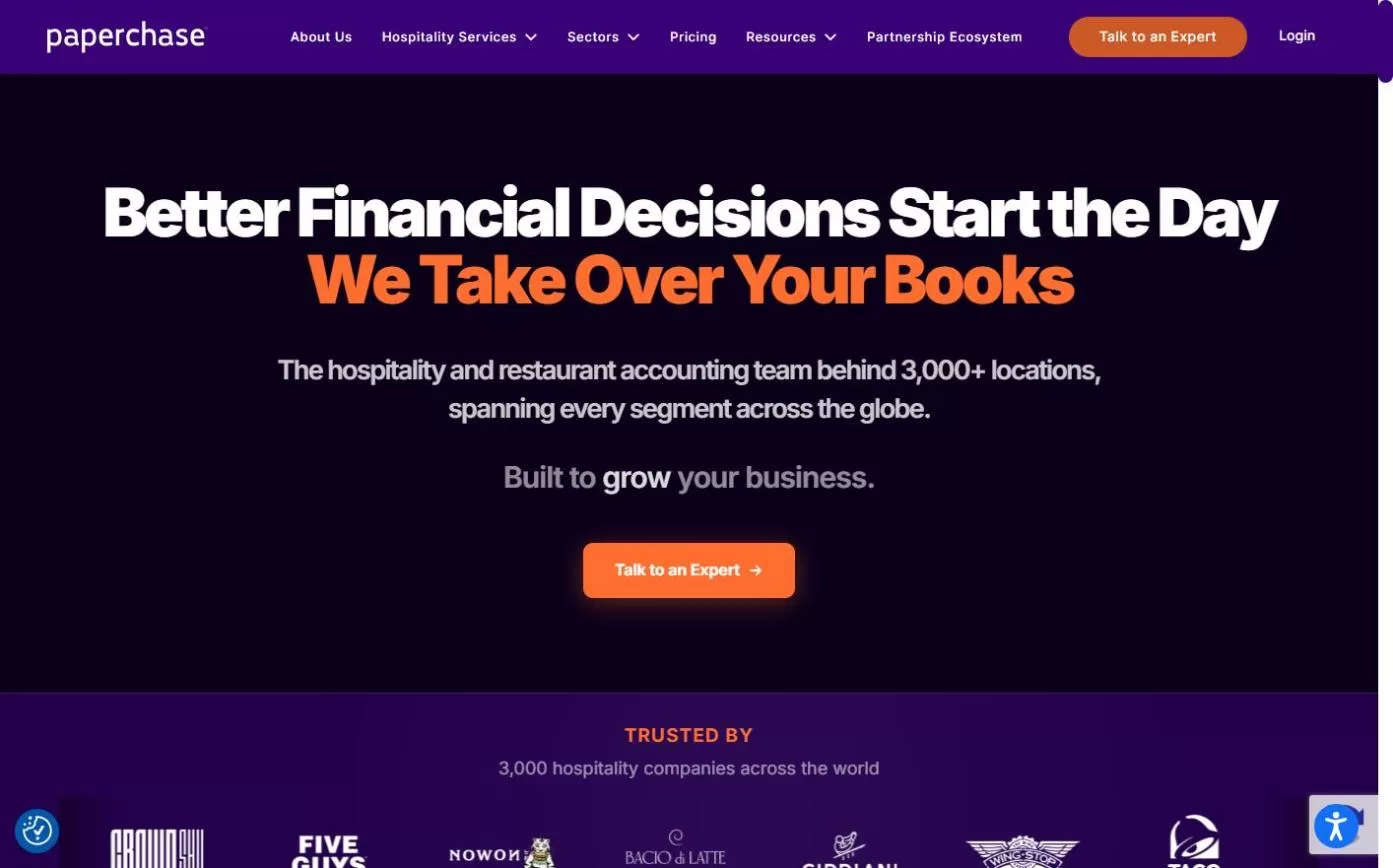
Paperchase is a hospitality accountancy and consultancy firm working with restaurant and hospitality operators in the UK, the US and the UAE. Owners look for accountants who understand both their sector and their city, so the firm needed deep topical authority and a local presence in each market it serves.
Client
Paperchase
Industry
Hospitality accountancy
Markets
UK, US, UAE
Services
Content SEO, Local SEO
Website
500
Blog articles in the sitemap
5
City landing pages in 3 countries
16
UK Restaurant Pulse editions in 2026
Figures counted from the live site, October 2026.
The challenge
Why this project mattered
Generalist accountancy firms dominate broad finance searches. A specialist wins by being the most useful source on hospitality-specific questions, and by being visible when an operator searches for help in their own city.
That needs volume, local relevance and a reason for people to come back and link to the site.
What we did
Our approach
01
A 500-article content library
500 blog articles across three post sitemaps, written for hospitality operators and the finance questions they search for.
02
City landing pages
Dedicated pages for London, New York, Los Angeles, Miami and Dubai, so “hospitality accountant + city” searches land on a page about that market.
03
UK Restaurant Pulse
A fortnightly series tracking same-store sales across the UK hospitality market, with 16 editions published in 2026 and a hub page that collects them. Original, regularly updated data gives operators, journalists and AI assistants a reason to cite the firm.
What We Delivered for Paperchase
The content and local SEO program for Paperchase is live and still growing:
- 500 blog articles across three post sitemaps, written for hospitality operators
- Five city landing pages for London, New York, Los Angeles, Miami and Dubai, covering the UK, the US and the UAE
- The fortnightly UK Restaurant Pulse, with 16 editions published in 2026 and a hub page that collects them
Organic traffic, enquiry and citation figures will be added here once they are verified against Paperchase’s own Search Console and CRM reporting.
Lessons From the Paperchase Project
1. Specialists win on depth, not breadth
A hospitality accountant cannot outrank large generalist firms on broad finance terms, and does not need to. The winning move is to answer the questions restaurant, bar and hotel operators actually ask, such as VAT on service charges, tronc schemes, food cost ratios and multi-site reporting, more clearly than anyone else. A 500-article library built around those questions turns the firm into the obvious source for its niche.
2. Local pages need local substance
City pages work when each one reflects the market it targets: the regulations, tax rules and business conditions of that city or country. A page for Dubai should not read like the London page with the city name swapped. That local substance is also what helps the pages appear in map results and in AI answers to “hospitality accountant near me” style questions. Google explains the signals behind local results in its guide to improving local ranking.
3. Original data earns citations
The UK Restaurant Pulse gives journalists, operators and AI assistants something they cannot get elsewhere: a regular read on same-store sales across UK hospitality. Original, regularly updated data is one of the most reliable ways for a professional services firm to earn links and be named as a source, because it is genuinely new information rather than another opinion piece.
4. Consistency compounds
A fortnightly series only works if it keeps going. Publishing on a fixed rhythm builds an archive, gives returning readers a reason to come back and creates a steady stream of fresh pages for search engines to crawl.
5. Answer first, explain second
Operators usually arrive with a specific question and limited time. Articles that give the direct answer in the opening paragraph, then explain the detail, are easier for readers to use and easier for Google AI Overviews and ChatGPT to quote. The same structure helps the Paperchase library show up for long, conversational questions as well as short keyword searches.
Who this approach suits
This model fits specialist professional firms, including accountants, lawyers, consultants and advisers, that serve one industry across several cities or countries. It works best when the firm has real expertise to share and someone who can review content for accuracy before it is published.
Services Used in the Paperchase Project
- Search engine optimization: content strategy, the 500-article library, city landing pages and local SEO.
- AI visibility optimization: clear entity information and original data that AI assistants can cite.
- Brand consulting: positioning the firm as a hospitality specialist rather than a generalist accountant.
For Paperchase the services were planned together: the brand position decided which topics to cover, the content plan decided which city pages were needed, and the entity work made sure the firm is described the same way on its own website, in its city pages and across directories, social profiles and the wider web, so readers and AI assistants meet one consistent description wherever they find the firm. Treating them as one program avoids the common problem of a large blog that brings traffic but does not explain why a reader should choose the firm.
Run a specialist firm and want to own your category in search? Talk to us about content and local SEO.
Related Case Studies

Supy: International SEO in 6 Languages
3,500+ indexable URLs and six hreflang-linked languages for a restaurant SaaS.StockTake Online: SaaS SEO
10 segment landing pages, free cost calculators and a 230+ article blog for a hospitality software brand.Both serve the same hospitality market from a different angle, one through software and one through finance expertise. See all projects in our portfolio.
Want to own your category’s search results?
We’ll find the content and local gaps your competitors haven’t covered yet.
Next case study